Light Jets: Efficiency for Short-Haul Routes
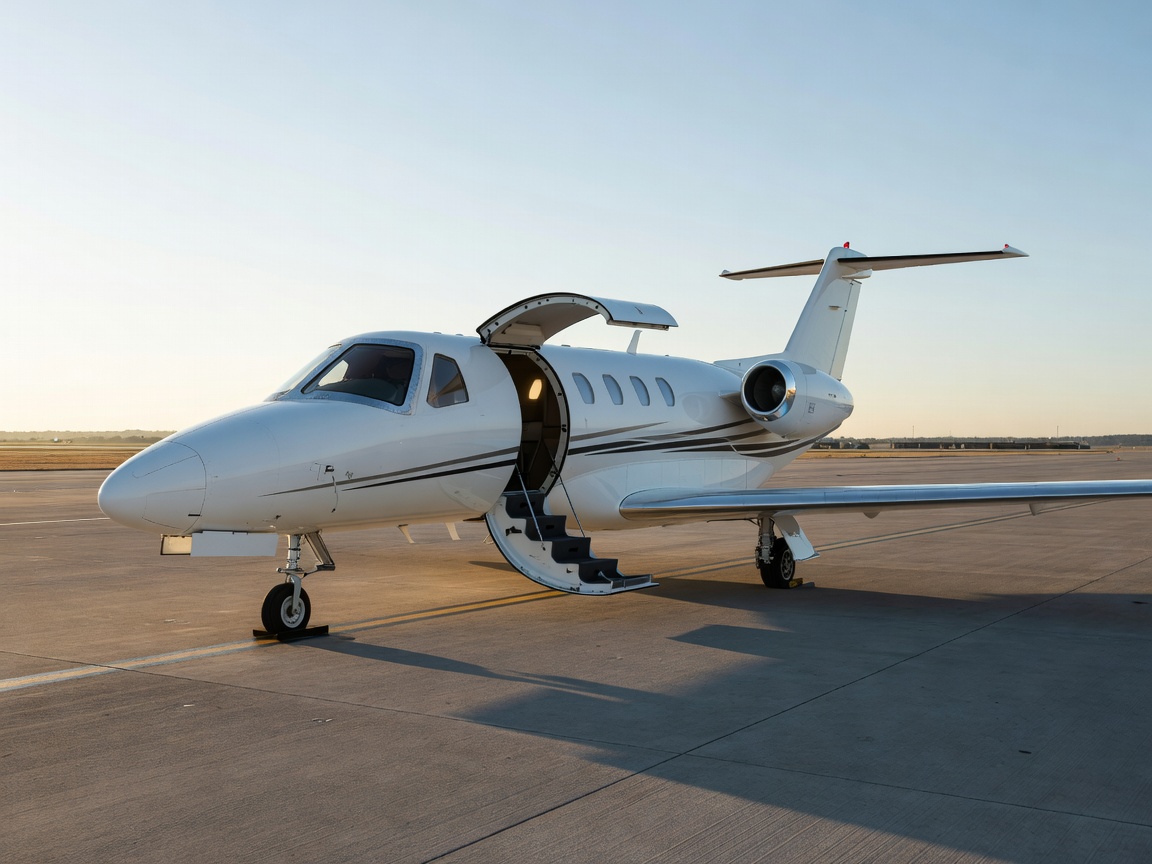
For itineraries demanding rapid regional connectivity without the overhead associated with heavier airframes, the Light Jet category represents the pragmatic entry point into private aviation. Defined by their ability to accommodate up to seven passengers for flights generally lasting under three hours, these aircraft offer an unparalleled blend of economic efficiency and private terminal convenience.
Core Capabilities and Characteristics
Light jets are specifically engineered for intra-continental travel. They effortlessly navigate routes such as London to Geneva, New York to Miami, or Los Angeles to Las Vegas. The primary advantage of a light jet is its operational flexibility. Because of their lower weight profiles, they are fully capable of utilizing shorter runways at secondary or regional airports, often bringing passengers significantly closer to their final destinations than standard commercial hubs allow.
Cabin environments, while compact compared to larger classes, are meticulously designed to maximize passenger comfort. Expect club seating arrangements configured in fine leathers, fold-out executive tables for productivity, and specialized soundproofing. However, it is important to note that most light jets do not feature full stand-up cabins; cabin heights typically hover around 4 feet 9 inches to 5 feet.
Category Leaders
The marketplace for light jets is dominated by a few historically significant and technologically advanced airframes.
- Embraer Phenom 300: Consistently ranking as one of the most requested aircraft in charter markets, the Phenom 300 boasts class-leading luggage capacity and impressive speed. Its Oval Lite cabin profile provides a sense of spaciousness rarely found in competing models.
- Cessna Citation CJ3+ / CJ4: The Citation family is legendary for reliability. The CJ4, in particular, pushes the boundaries of the light jet category with enhanced range and a superior avionics suite.
- HondaJet Elite: Characterized by its unique Over-The-Wing Engine Mount (OTWEM) configuration, the HondaJet offers a notably quiet cabin and exceptional fuel efficiency.
Pros and Cons of Light Jets
| Advantages | Limitations |
|---|---|
| Highly cost-effective charter rates per hour. | Limited luggage capacity (soft bags often recommended). |
| Access to a broader range of regional and municipal airports. | Restricted range; typically requires fuel stops beyond 1,500 nautical miles. |
| Ideal for swift point-to-point business travel. | No flight attendant; self-serve catering arrangements only. |
| Modern avionics and safety systems equivalent to larger jets. | Enclosed lavatories are present but basic; often belted to act as an extra seat. |
Luggage Considerations
One of the most crucial elements to verify prior to chartering a light jet is the volumetric capacity of the baggage hold. Unlike heavy jets, where cargo space is rarely an issue, a fully occupied light jet may struggle to accommodate hard-sided luggage or oversized items such as golf clubs and skis. Charter brokers heavily advise utilizing soft-sided duffel bags to maximize the geometric efficiency of the designated storage areas.