Turboprops: Unmatched Versatility
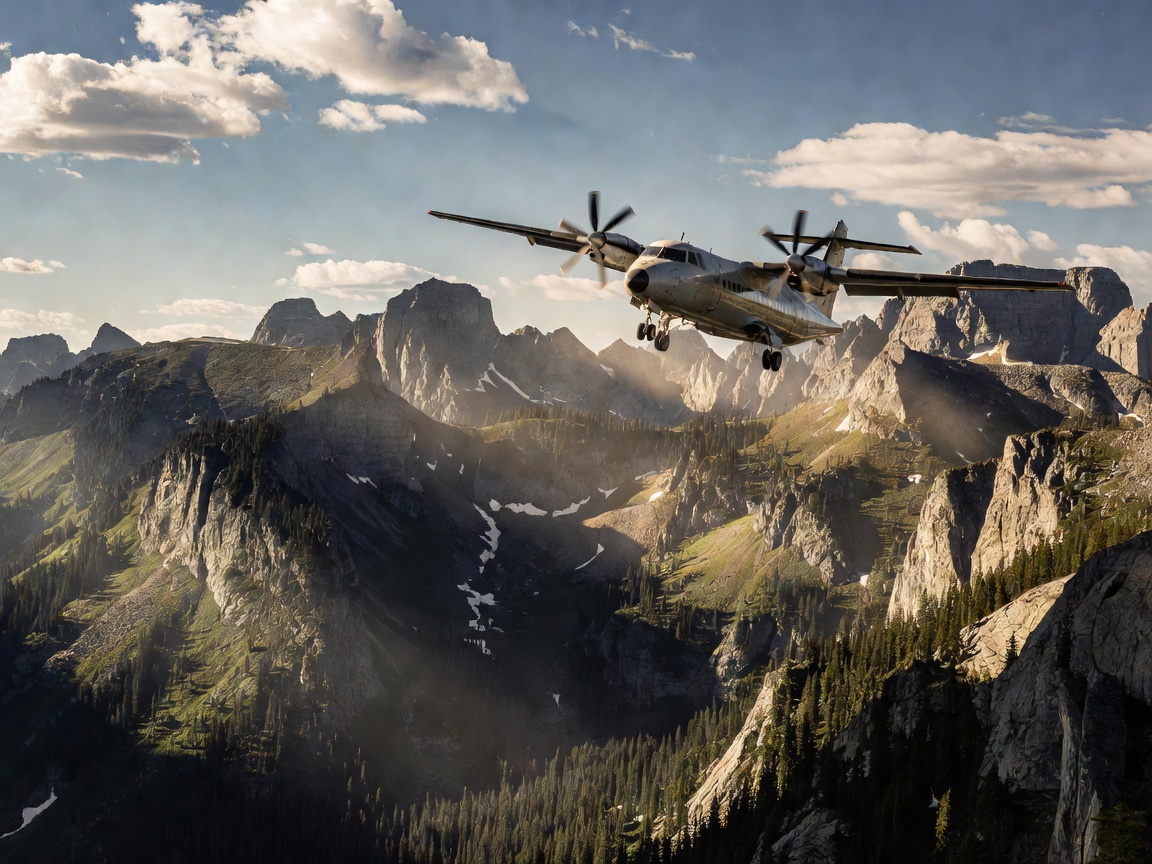
Turboprop aircraft represent an exceptionally pragmatic and highly versatile segment of private aviation. Powered by gas turbine engines driving propellers, these aircraft yield substantial fuel efficiencies at lower altitudes and slower speeds compared to pure jet engines. For regional travel, mountain access, or short runway operations, turboprops routinely outperform light jets both in mission capability and charter economics.
Operational Excellence in Challenging Terrain
The defining characteristic of a turboprop is its remarkable runway performance. Because the propellers generate immediate thrust and can be reversed upon landing to create intense aerodynamic braking, turboprops can access airfields with remarkably short strips, including grass, dirt, or gravel runways that would cause severe damage to a standard jet turbine.
This capability makes turboprops the preferred choice for flights accessing remote ski resorts, island airstrips, or rural corporate facilities. While cruising speeds are inherently slower than jets—averaging between 250 and 320 knots—on routes under 400 miles, the block time difference between a turboprop and a light jet is often measured in mere minutes, nullifying the jet's speed advantage.
Leading Turboprop Models
The turboprop market is divided into single-engine and twin-engine variants, each offering distinct advantages regarding volume and operational costs.
- Pilatus PC-12: A single-engine marvel that has revolutionized the category. The PC-12 features a massive rear cargo door, a cavernous cabin matching the volume of midsize jets, and unyielding reliability. It is an ideal platform for both executive transport and substantial cargo requirements.
- Beechcraft King Air 350i: The undisputed king of the twin-engine turboprop market. It offers dual-engine redundancy, a beautifully appointed square-oval cabin, high payload capacities, and advanced noise-canceling technologies that rival light jet acoustics.
- Daher TBM 940: Designed for speed, this single-engine turboprop cruises at an astonishing 330 knots, effectively bridging the gap between turboprop economics and light jet travel times for small groups of 4-5 passengers.
Cabin Environment and Comfort
There is a persistent misconception that turboprops compromise on luxury. Modern turboprop cabins are finished to the exact same executive standards as their jet counterparts, utilizing premium leathers, rich veneers, and advanced climate control systems. While ambient cabin noise was historically a concern due to propeller proximity, contemporary airframes employ highly engineered acoustic insulation and active noise dampening systems to provide a serene passenger experience.